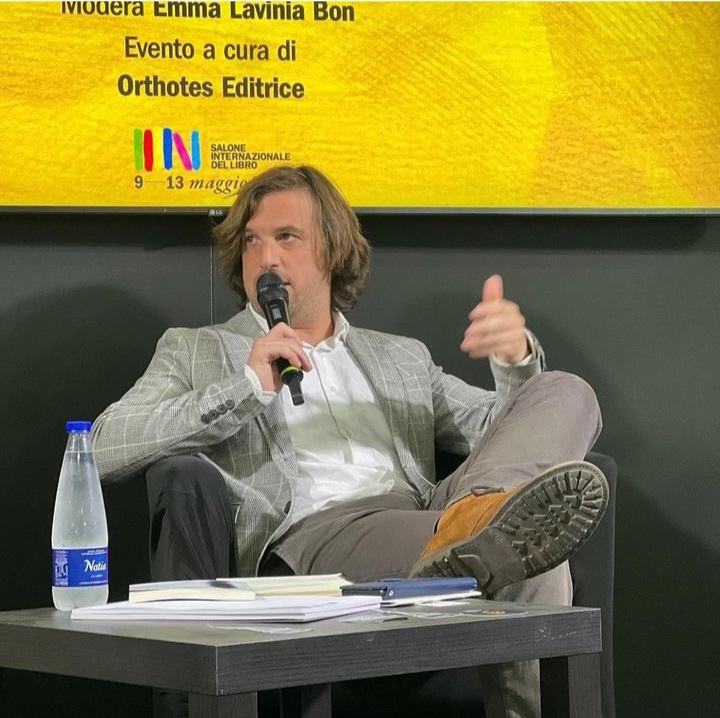
I am an author, film critic, and academic researcher in philosophy, currently at Wuhan University 武汉大学. I mainly work in the philosophy of identity, broadly intended – social identity, personal identity, metaphysical identity – and aesthetics.
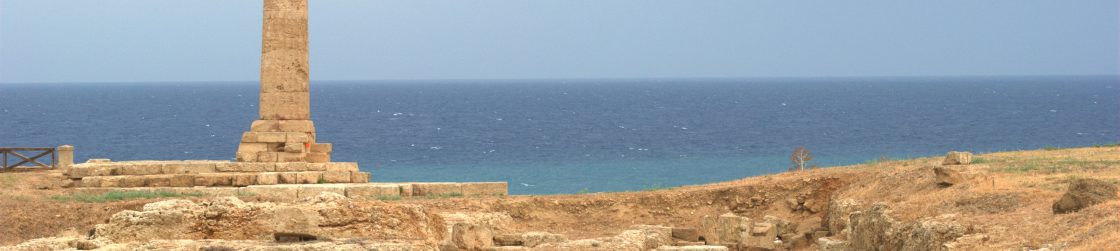
As for philosophy of identity, I am interested in all those processes leading to identity formation, transformation, deformation, and deconstruction. As for aesthetics, I do not refer merely to theories of beauty or philosophy of art; following the etymology, I intend aesthetics as a broad discipline concerned with theoretical reflection on the value (and disvalue) of perceptual experiences. Among these, I am particularly interested in visual arts, such as films, paintings, images, but also in places, and therefore architecture, environments, and so forth.
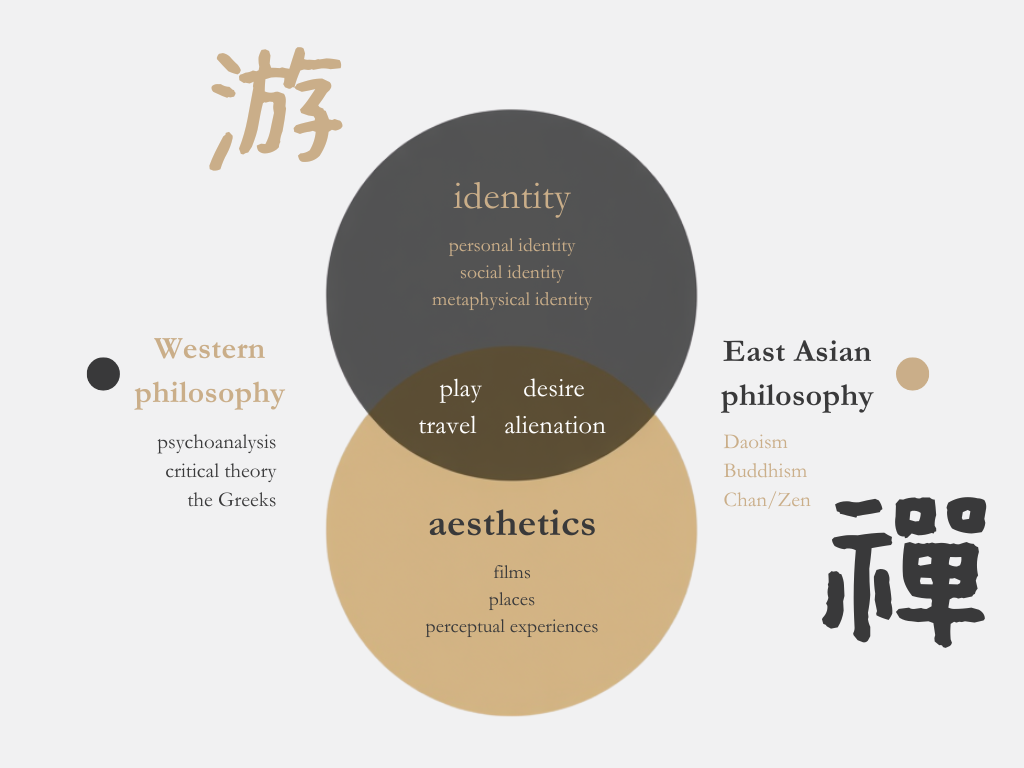
Philosophy of identity and aesthetics intersect in several ways. I worked and published extensively on play, travel, alienation, and desire, concepts and experiences that challenge the boundaries of the familiar and open our identity to the strange, the unknown, the unfamiliar.
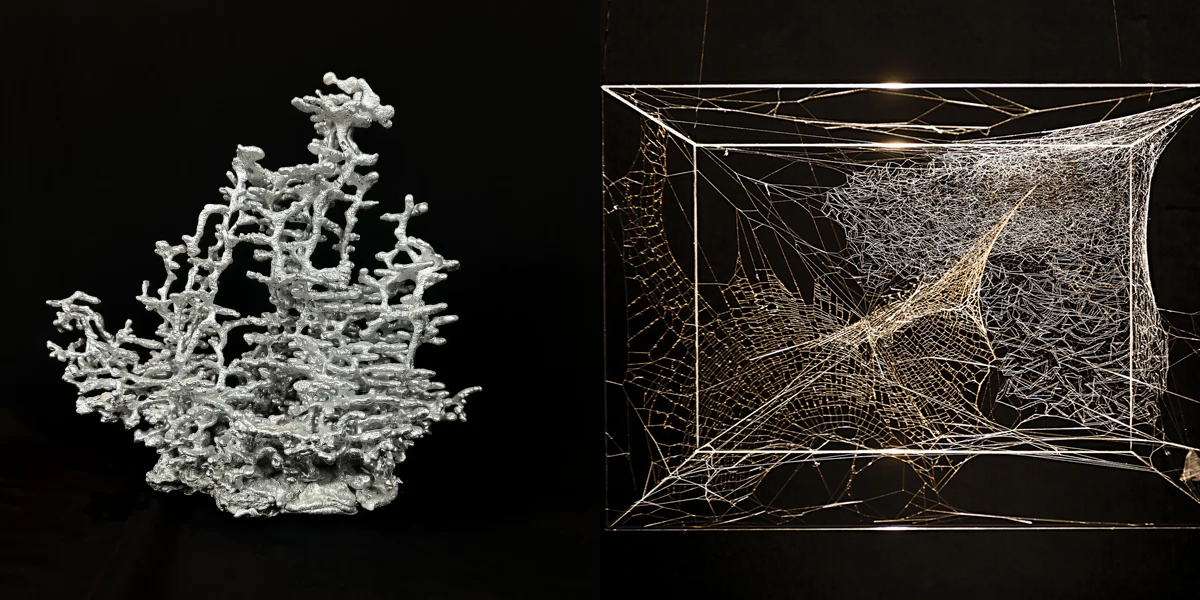
In terms of methodology, there are two major paradigms for research in the humanities nowadays, which I like to describe as “the ant and the spider“. The ant is highly social, cooperative, capable of highly specialized tasks, and of digging kilometers below the ground to build vast colonies. By contrast, the spider is solitary, suspended above the ground, devoted to sophisticated architectures of cobwebs that are also full of charm and craft.
I believe both models are necessary for all researchers, and for all research. The ant is, of course, the dominant model nowadays. Tormented by a complex of inferiority, human sciences (a denomination that is in itself a manifesto) strive to emulate the paradigms of natural sciences: teamwork, relentless productivity, practical application, high specialization of codified roles and tasks, measurable and immediate social impact – all qualities exemplified by the ant.
I am convinced that philosophy should be scientific in the sense of rigorous, informed, accurate, well structured, but I am not convinced that philosophy can become a science. I am also not convinced that philosophy should become a science. From a historical point of view, and even considering the dry circumlocutions of contemporary analytic philosophy, philosophy manifests first and foremost as a form of literature. Even more heretically, I am convinced this is not necessarily a setback for philosophy. As Bertrand Russell famously put it, “science is what we know, philosophy is what we don’t know”: philosophy is constantly reaching beyond itself, jumping from one point to the other, moving swiftly, weaving connections.
For these reasons, I tend to be sympathetic to the spider. According to Giorgio Colli, “every philosopher seeks to find meaning—that is, a unity—in the world; but the objects he must consider are infinite, and the conceptual connections he must establish between them are, if possible, even more infinite. A philosopher’s vigor is measured by the breadth of this net, which he casts over things, attempting to grasp and tighten them. But what equally matters is the quality of this web’s weave. The spider’s silk must be lustrous and uniform, and tenuous enough to deceive its prey. It is the strength of the gaze that establishes this lucid and enveloping unity” (1983).
Of course, in seeking breadth, we risk losing something in depth; yet, weaving is more fun than digging. This is one of the reasons why I adopt a cross-cultural approach, seeking to establish or uncover original plots and connections between different authors, cultures, and languages. Part of my sources comes from the domain of Western philosophy, such as Greek philosophy and mythology, critical theory, and psychoanalysis. Part of my sources comes from the domain of East Asian philosophy: mostly Daoism, and Buddhism, with a focus on the Chan/Zen tradition.
This blog functions as a showcase where I display the progress of my works, and also some works in progress. The three most frequently updated sections of the site are visions, where I talk about cinema and images; places, where I talk about places; and digressions, where I just talk about something else. Publications contains a selection of my academic publications; work in progress contains a list of what I hope will become academic publications; and books, is self-explanatory.
For events or collaborations, you can contact me via email – rcapra8@gmail.com – or my other profiles and platforms:

